No matter the season, REC is always ready to restore power safely and quickly. It’s a key part of our commitment to reliability.
In outage events, safety comes first. “Protecting crews, members and the public is the top priority,” says Kevin Pories, senior director of operations & construction for the Culpeper region. This starts with deenergizing lines before repairs, then using proper protective equipment and following strict protocols.
The big question everyone has when they lose power is “for how long”? With our outage text-messaging service, members can get texts on:
- The cause of an outage, when available.
- The expected time we’ll restore power.
- When we’ve dispatched a crew or they’re on site.
Getting the Power Back On
In a large-scale outage, REC teams across the affected area evaluate the extent and type of damage, like broken poles, transformers, wires and other infrastructure.
“Restoration can take time depending on damage severity,” Pories says. “Based on the assessment, REC prioritizes repairs that restore power to the largest number of members first, then moves to smaller outages and individual service lines.”
REC field crews, drones and sensors identify the locations of the damage. Then we prioritize restoring power to:
- Hospitals
- Emergency services
- Water treatment plants
- Schools
- Circuits that serve the largest number of members
Another key part of our effort is communication between operations, dispatch and field crews. REC will reroute power through alternate sources when they are available to restore power to members. Here are the steps our crews follow after a storm outage:
Step 1
Crews inspect distribution substations. Our substations, which can serve hundreds or thousands of REC members, receive high-voltage power from transmission lines and then distribute it to lower-voltage main distribution lines. (See How the Power Grid Works infographic.)
When we have a major outage, REC substation technicians inspect the substations to learn if the problem is from transmission lines feeding into the substation, within the substation or further down the line.
Step 2
If they can’t isolate the problem at a substation, the crews first check the main distribution lines. These lines carry power to large groups of members in the REC service territory. Crews work on outage repairs, moving out from the substation to your home or business.
Step 3
Crews check the tap lines. Sometimes damage occurs on these service lines between the nearest transformer and homes, businesses or schools. REC line crews then correct the trouble in areas that serve the greatest numbers of members and work until all power is restored.
Living and Working Through the Outage
When a major outage occurs, REC calls all hands to respond, and employees often work 16-hour shifts during major storm events. “They know how important it is to have power restored because they’re living it, too. It’s very tough on them because they can’t take care of tasks at home,” says Darrell Potter, senior director of operations & construction for the Blue Ridge region.
Be Safe During a Power Outage
If you lose power at your house or in your neighborhood, please:
- Stay clear of downed power lines. Contact with these lines could be life threatening.
- Report the outage as soon as possible.
- Tell REC if you see damage. This could be a fallen tree or broken pole.
learn more about staying safe in storms.
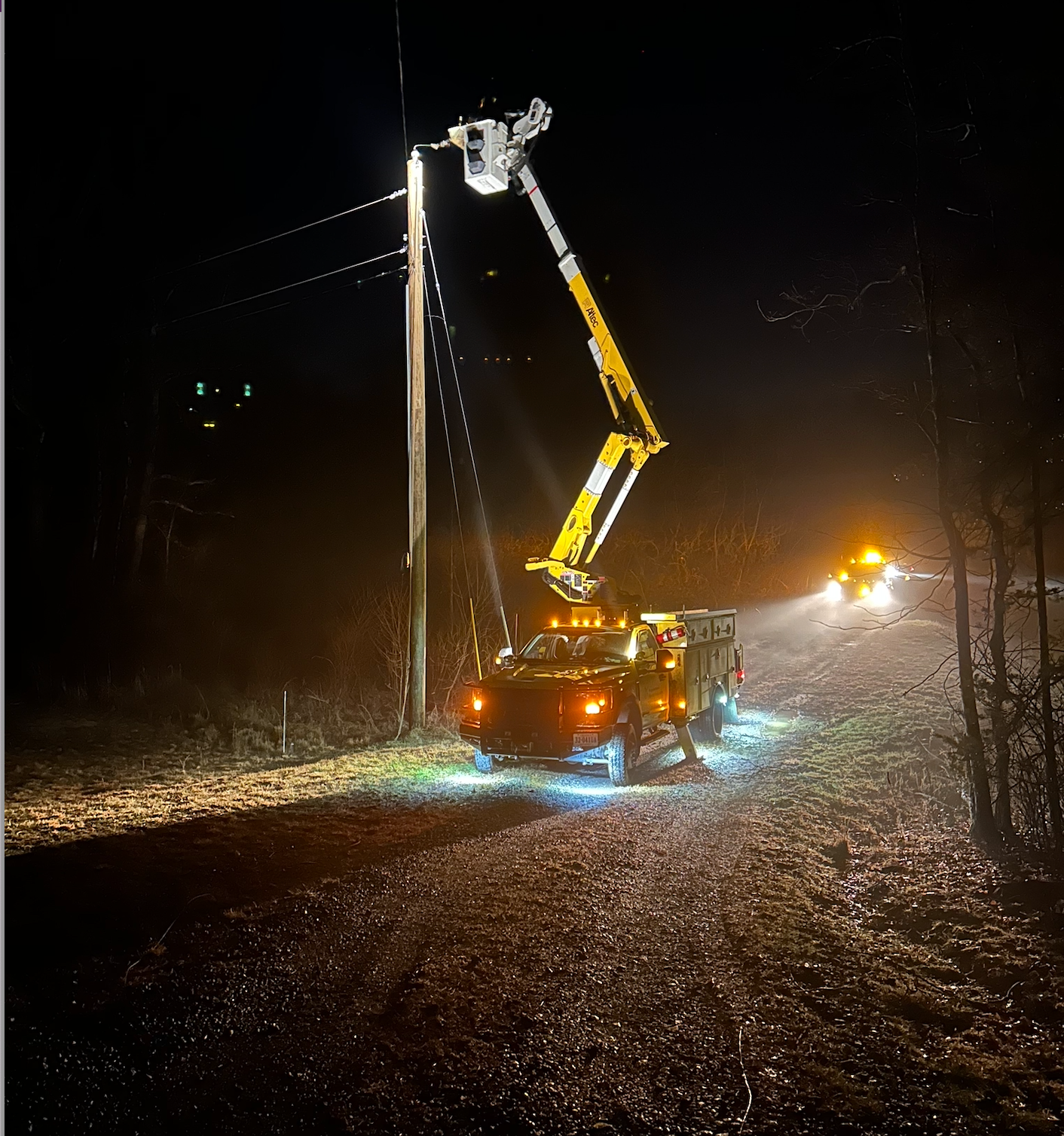
Line crews put in long hours fixing damage.
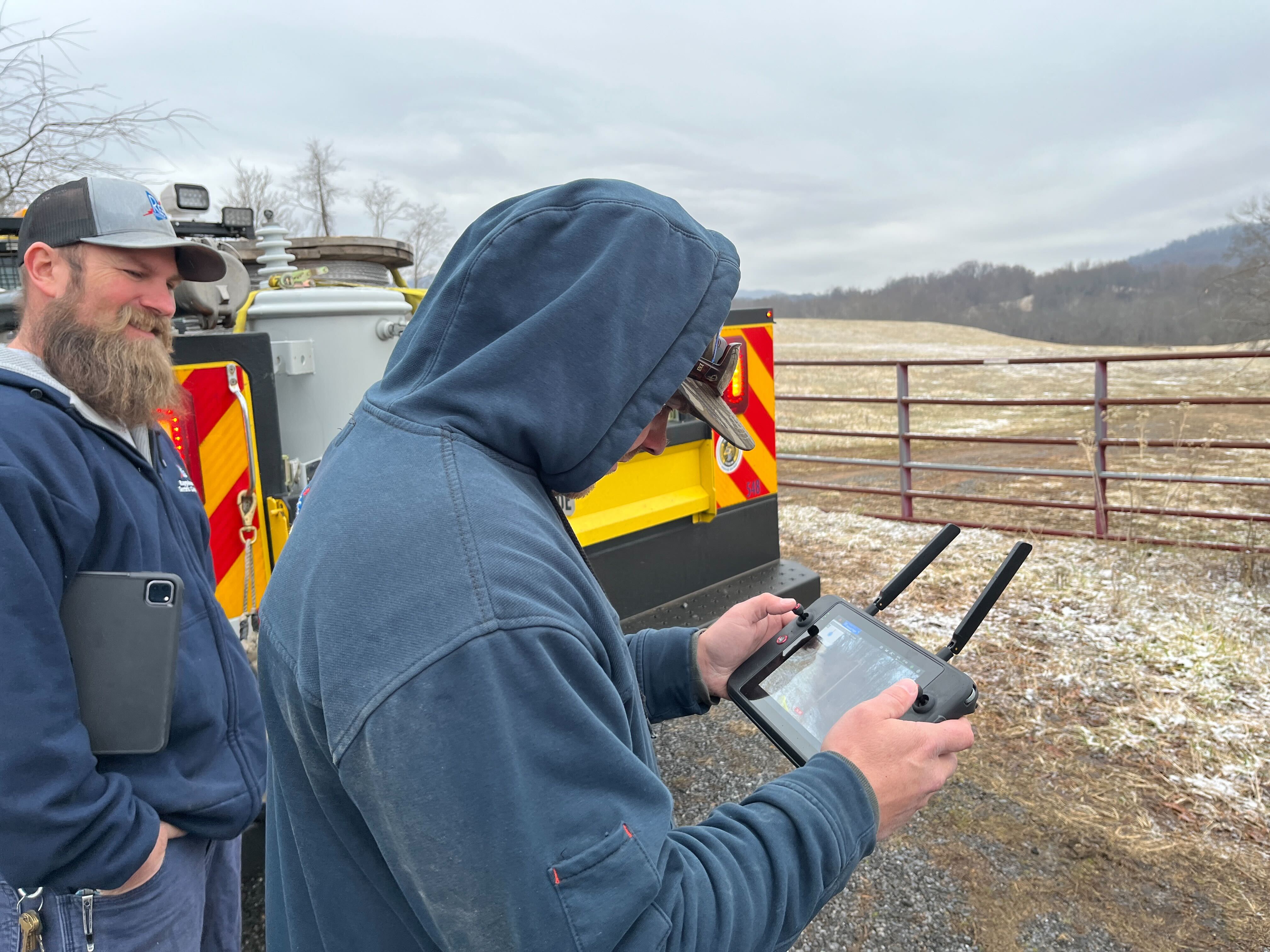
Drone inspections detect needed repairs.

The operations team is vital to coordinating repair efforts.