By John Hewa, President & CEO, Rappahannock Electric Cooperative
When you hear the phrase grid modernization, it can sound abstract, like something happening behind the scenes or only relevant to engineers. At its core, grid modernization is about building a more resilient electric system. It means using modern technology to see what's happening across the system, to isolate problems more quickly, to restore power safely and to plan upgrades more precisely — all with the goal of delivering a more reliable electric system for our members.
At REC, our mission has always been to provide safe, reliable, affordable and sustainable power. That mission hasn't changed, but the demands placed on the electric grid have.
REC member-owners use an average of about 300 more kilowatt-hours per month than they did ten years ago, driven by a surge in "always-on" technologies. The typical U.S. household with internet now has 17 connected devices, including smart TVs, at least one smart-home device and a security system, meaning more continuous background electricity is being used. In Virginia specifically, the U.S. Energy Information Administration's (EIA) Residential Energy Consumption Survey shows roughly one out of every four homes use an all-electric central heat pump as their main heating equipment.
Transportation is electrifying too: By 2025, Virginia had roughly 903 registered electric vehicles for every 100,000 residents, placing it well above the national average. At the same time, electrification at home is accelerating. According to EIA's Short-Term Energy Outlook, the residential sector accounted for about 67% of small-scale solar capacity in mid-2023, indicating the majority of distributed solar is owned by households rather than commercial installations.
Meanwhile, businesses rely on power for increasingly digital and automated operations: EIA estimates commercial computing (including data centers and other computing loads) was about 8% of commercial electricity consumption in 2024 and projects it could reach 20% by 2050.
At the same time, extreme weather events are becoming more frequent and more intense. From 1980 to 2024, the U.S. experienced 403 weather and climate disasters with losses greater than $1 billion, reflecting rising extreme weather frequency and economic cost. Grid modernization is how we meet these challenges head-on.
What Grid Modernization Looks like at REC
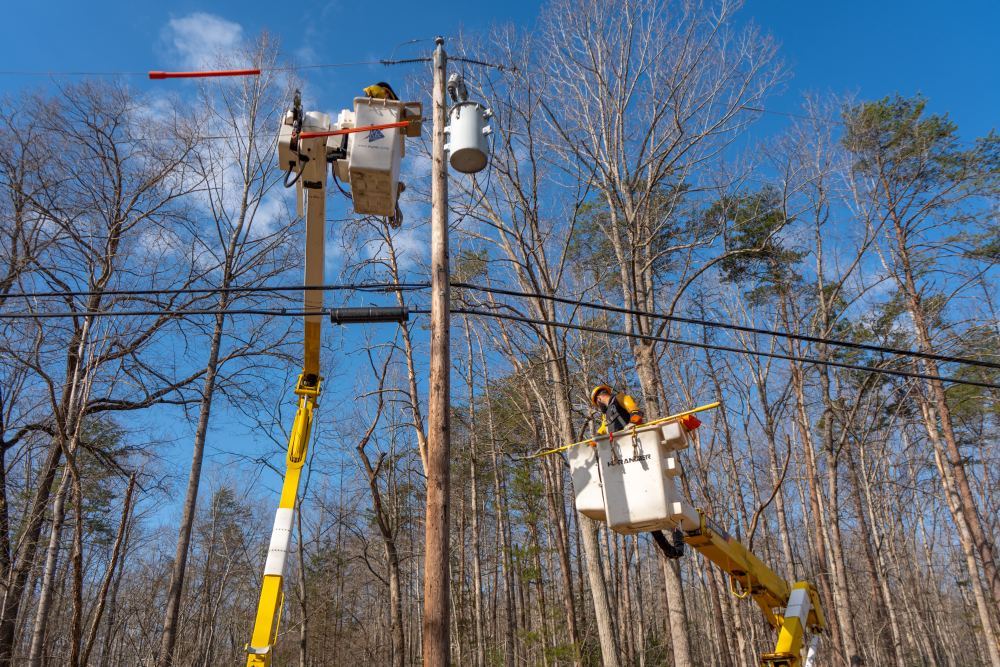
At your Cooperative, grid modernization is not a future concept — it's active work underway across our system. Over the past year, we have:
- Completed 48 grid improvement projects and advanced 17 projects under construction, including substation upgrades, automated switching and sectionalizing equipment, upgraded protection and monitoring systems, and fiber-connected facilities that improve visibility and speed up restoration.
- Expanded our fiber backbone to now include 64 substations, giving operators and crews real-time visibility into system conditions and improving communication during outages and restoration.
- Reduced outage risk through large-scale vegetation management, using advanced analytics, satellite imagery and system data to remove over 2,400 hazard trees, target high-rsk areas and maintain 1,800 miles of right-of-way before storms reach our lines.
Preparing for Growth and Changes
Our region is growing, and growth doesn't look the same as it once did. Over the past year alone, REC added nearly 4,000 new electric connections across our service territory and reached an all-time system peak of more than 1,191 megawatts, reflecting both new development and changing energy use. New homes, expanding businesses and large-scale energy users all place different demands on the grid. Grid modernization allows us to plan not just for today's needs, but also for what's coming next. As more members adopt technologies like rooftop solar paired with battery storage or charge electric vehicles at home, grid modernization ensures the system can safely manage two-way power flows and increased demands without unnecessary systemwide upgrades.
With modern tools and data, we can forecast demand more accurately, operate the grid more efficiently and make targeted investments in technologies that protect and enhance reliability without placing unnecessary costs on our members. That's an important point: Modernization is not about change for its own sake. It's about making disciplined, strategic investments that deliver long-term value and support a stable, dependable system.
Reliability is Not an Accident
Reliable electricity doesn't happen by chance. It's the result of careful planning, commitment of resources and people who understand both the electric system and the communities it serves.
Grid modernization strengthens that foundation. It gives our crews better information in the field. It helps our engineers see and respond to system conditions more readily. And it improves our ability to adapt when circumstances change, whether that's severe weather, increased demand or new technology connecting to the grid. Most importantly, it positions REC to continue doing what cooperatives do best: serving members, not shareholders, with decisions guided by long-term community benefit.
Looking Ahead
Modernizing the grid isn't a single project or a finish line — it's an ongoing commitment built on real work already underway and continued investment in the system our member rely on every day. One that requires a clear focus on delivering reliability, affordability and dependable service for our members.
In 2026, REC will invest approximately $113.6 million in grid improvements and system upgrades, ensuring these dollars are spent deliberately to strengthen reliability while protecting members from unnecessary long-term costs.
As we continue this work, our goal remains the same: to ensure the lights stay on, the system stays strong and our members can count on REC today and in the years ahead.