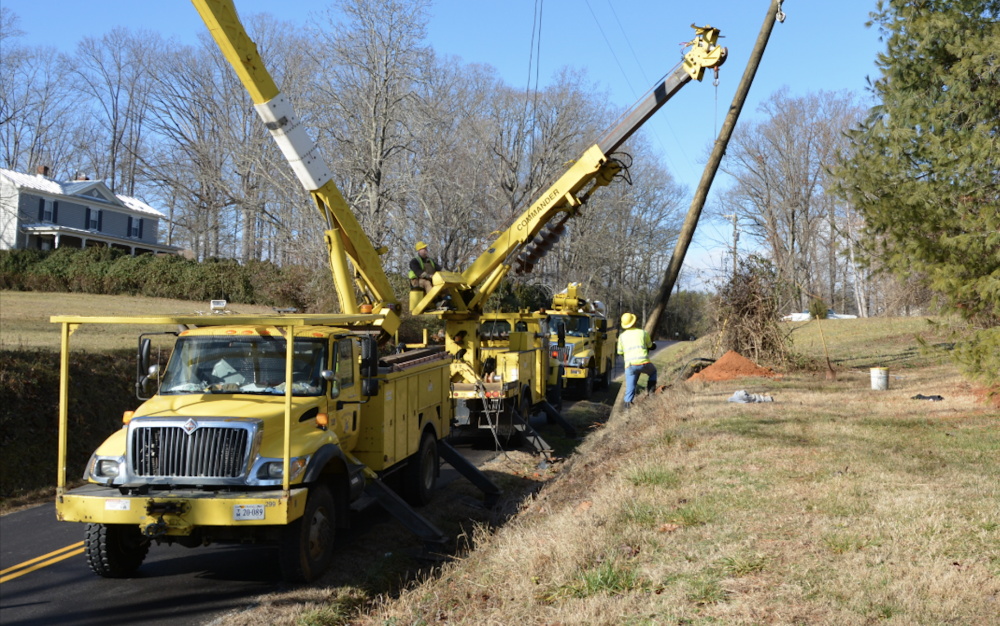
When the power goes out, so do REC's line crews. Lineworkers are the first to respond after an outage occurs, and they work tirelessly to restore power to the communities REC serves.
“If you’re traveling and see one of our crews on the side of the road, we kindly ask that you move over if possible and give them a little extra space to work,” said Casey Hollins, Managing Director – Communications and Public Relations. “We deeply care about the safety of all, and this extra precaution ensures just that.”
If you approach a crew while traveling on a two-lane road, moving over to the next lane might not be an option. In this case, REC asks that you slow down when approaching roadside crews. If you approach a crew while traveling on a four-lane road, and safety and traffic conditions allow, please move over into the far lane.
In Virginia, the Move Over law was enacted in 2002. Drivers are required to move over one lane if passing stopped vehicles with flashing amber, red or blue lights, such as first responders.
Utility crews aren’t the only ones who could use the extra space. Emergency responders, such as police officers, firefighters and emergency medical technicians, often find themselves responding to emergency situations near busy roadways. Please follow the same procedures mentioned above to help keep those crews safe.
“There’s plenty of room for all,” Hollins said. “Let’s work together to keep everyone safe on our local roadways.”